Event Coverage
Learning About the Dos & Don'ts of Some Asian Cultures
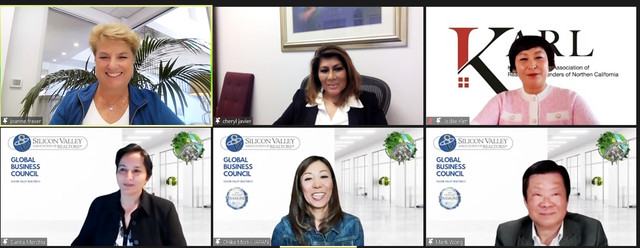
Silicon Valley is a melting pot of cultures, which has contributed to the region's success. In celebration of Asian American Native Hawaiian & Pacific Islander (AANHPI) Month in May, SILVAR's Global Business Council asked the following REALTORS® of Asian descent to share some dos and don'ts from their countries: Cheryl "C.J." Javier, Philippines; Jackie Kim, Korea; Sunita Merchia, India; Chika Mori, Japan; and Mark Wong, China, Taiwan and Hong Kong. Joanne Fraser, former chair of SILVAR's Global Business Council and 2021 SILVAR President, served as moderator on Tuesday's virtual program.
Common in Asian cultures is the respect for elders. In the Japanese and Korean cultures, it is a custom to bow when meeting people. Mori says when meeting a Japanese client, don't call them by their first name unless instructed to do so. First meetings are formal, no hugging or kissing.
Merchia said Indian clients start meetings with a handshake, which is firmer with men and softer with women. When greeting an older person, it is customary to fold your hands together, bow slightly, and greet them with "Namaste," a greeting showing your respect for elders.
Kim added greeting a client in the Korean language or trying your hand with some Korean words creates a friendly atmosphere.
Filipinos are a mixture of Malay and Spanish descent. Don't be surprised if they hug you when you first meet them, said Javier. They like to start with food on the table, casual conversations about family, and connections with people you might know before diving into business matters. Establishing personal relations are important to them.
Asians are typically not direct people. Their non-verbal cues can be more significant than what they say. They don't like verbal confrontation. A smile or nod does not necessarily mean yes, said Wong, and don't press on for an answer. Kim noted Koreans consider it rude to look a person directly in the eye. The Chinese feel the same way, said Wong.
Reverence for the home is important in Asian cultures. The Japanese and Filipinos will take off their shoes before entering their home. Merchia noted Indians like to proudly display a nameplate on their house. Javier said when entering a new home, it is customary for Filipinos to bring a container of rice, salt, water and a religious statue. Rice symbolizes abundance, salt wards off bad spirits, water stands for long life and purity, and religious statues for faith and divine protection.
Javier said Filipinos' concept of time can be an issue if you are used to being punctual. The Japanese, on the other hand, value time. Be on time, or better yet be early and don't converse about personal matters, said Mori.
Wong said the Chinese have many sources of funds but never ask a client where their money comes from. Kim said the Korean banking system is very different, so it is always good to explain the American banking system and how funds are wired to the country.
Merchia said REALTORS® should be knowledgeable about the real estate market because clients from India do a lot of research and will grill you. If they know more about the market than you, it is not a good sign.
Whatever you do for Asian clients, don't ever put them in an embarrassing position. "Saving face is important," said Wong.
Click HERE for more Asian Culture Dos & Don'ts shared by the panelists.
The Silicon Valley Association of REALTORS® (SILVAR) is a professional trade organization representing over 4,000 REALTORS® and Affiliate members engaged in the real estate business on the Peninsula and in the South Bay. SILVAR promotes the highest ethical standards of real estate practice, serves as an advocate for homeownership and homeowners, and represents the interests of property owners in Silicon Valley.
The term "REALTOR®" is a registered collective membership mark which identifies a real estate professional who is a member of the National Association of REALTORS® and who subscribes to its strict Code of Ethics.
For further information, please email or call the SILVAR office at (408) 200-0100.