Real Estate Articles
REALTORS® Learn More About EB-5 Visa
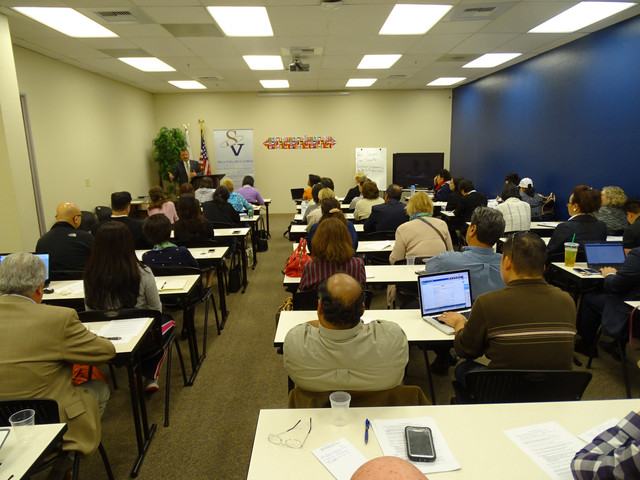
Sixty SILVAR members and guests came to SILVAR yesterday to learn about the the EB-5 visa program. At the event hosted by SILVAR's Global Business Council, Matt Schulz, immigration attorney with the Palo Alto global law firm Dentons, gave an overview of the program, how foreign investors use it, and cited examples of how the program can be used by foreigners who seek to invest and live in the U.S.
The EB-5 visa program is designed to attract foreign investment in projects that create jobs for U.S. citizens. Applicants must invest $500,000 to $1,000,000 in a new business approved by the US Citizenship and Immigration Services (USCIS) that will create at least 10 jobs over a speci?ed time period. Upon approval, a foreign investor receives conditional U.S. residency. Permanent residency can be granted after two years if the employment objectives are ful?lled.
Schulz distinguished between two main types of EB-5 visas. The Individual EB-5 requires direct investment in any for-pro?t of business that creates at least 10 full-time jobs for U.S. workers. The Regional Center EB-5 visa requires investment in USCIS-approved regional centers creating at least 10 direct or indirect jobs per investor. The investor is usually a limited partner or member of an LLC and is free to live anywhere in the U.S.
Schulz said foreign nationals seek an EB-5 visa so they and/or their families can live and obtain permanent residency in the U.S. Educating their children is the main incentive of many foreign investors seeking this type of visa, especially those from China. Affluent foreigners seek residency and also want to diversify their assets. Those from other countries like Mexico, also want to bring up their children in a safer environment. Schulz said China is currently the biggest source of EB-5 visa users, followed by Vietnam.
In these situations, usually the spouse of the foreign investor, often the wife, is the principal and lives in the U.S. while the children go to school. The husband takes care of other business at home and visits.
There have been many successful businesses and projects created by the program, like hotels, franchises. A law firm, he noted, may not be feasible because salary requirements would be too high and the business would not yield high returns.
Since it was launched in 1990 by the USCIS, the EB-5 program has gained popularity as a way for foreign nationals to acquire permanent residency in the U.S. The program has also been a target of controversy as some businesses are being investigated by the U.S. Securities and Exchange Commission. There was concern the program would reach its limit of 10,000 visas per year for the ?rst time in 2013 and whether the program should be renewed, but so far, the program continues.
Schulz described the steps in obtaining the visa, which can be complicated. He stressed while the main goal for this type of foreign investor is residency, and having the money is necessary, it is only granted unconditionally if the EB- visa 5 project ful?lls its job creation requirements. The foreigner investor needs to have business skills and submit a detailed business plan which can qualify and be approved by the USCIS. They will also need advice from immigration and tax attorneys. Real estate agents who have clients interested in obtaining EB-5 visas and purchasing property in the U.S. should learn more about the program and refer their clients to experts who can advise them on the next steps.
The Silicon Valley Association of REALTORS® (SILVAR) is a professional trade organization representing over 4,000 REALTORS® and Affiliate members engaged in the real estate business on the Peninsula and in the South Bay. SILVAR promotes the highest ethical standards of real estate practice, serves as an advocate for homeownership and homeowners, and represents the interests of property owners in Silicon Valley.
The term "REALTOR®" is a registered collective membership mark which identifies a real estate professional who is a member of the National Association of REALTORS® and who subscribes to its strict Code of Ethics.
Variations of this article have appeared in local area newspapers.
For further information, please email or call the SILVAR office at (408) 200-0100.