Event Coverage
SILVAR Members Learn About Visas for Foreign Nationals
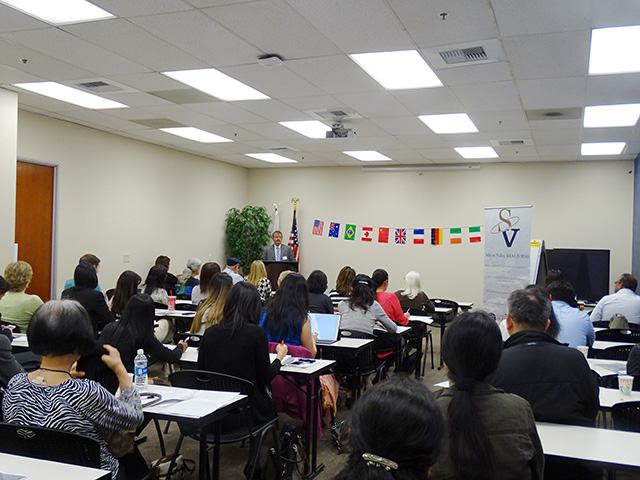
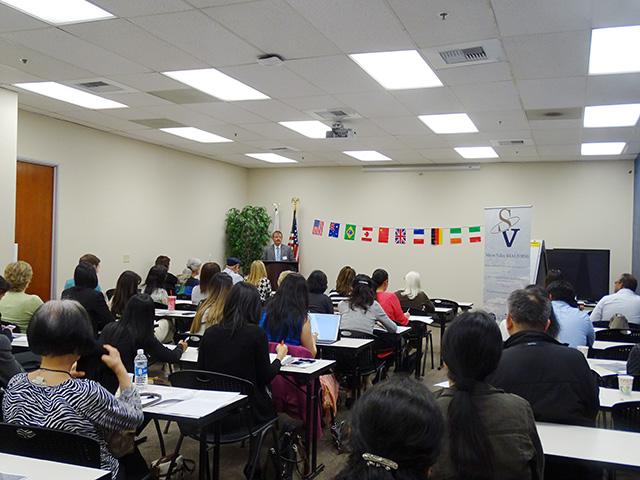
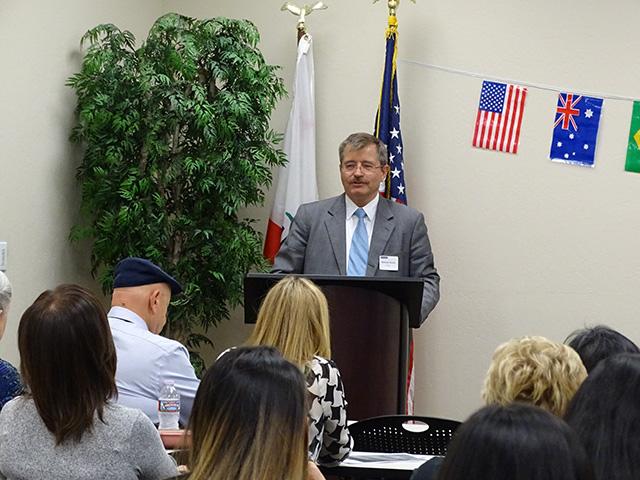
Nearly 60 members came to listen to immigration attorney Matt Schulz explain the different types of visas foreign nationals who want to live in the U.S. may obtain.
At yesterday's "Types of Immigrant and Non-Immigrant Visas" program hosted by SILVAR's Global Business Council, SILVAR members learned there are many types of visas which foreign nationals can avail of if they want to work and live in the U.S. Once they have a visa, there are also a number of intricate paths they can follow to obtain permanent residency and later, U.S. citizenship.
According to Matt Schulz, an immigration attorney with Dentons law firm in Palo Alto, family-based sponsorship is a popular way to obtain an immigrant visa if a U.S. citizen wants to have his foreign spouse, parents or siblings live in the U.S. Length of the process depends on type of relationship and country of origin, as each country has annual limits on the number of visas granted.
Popular, especially in Silicon Valley, is the H-1B non-immigrant visa which allows U.S. employers to temporarily employ foreign workers in specialty occupations. This visa is most commonly used by tech companies who hire foreign workers. The visa is granted for up to three years, and can be extended for another three years. Before the end of renewal, Schulz explained how some foreign workers embark on other paths to obtain permanent residency status.
While there has been recent talk by the Administration about overhauling the H-1B visa system, Schulz said the executive order is largely symbolic and merely calls for a long-term review of the program to make sure firms are in compliance with its requirements. There may be changes in the way the visas are allocated, but no calls to limit their number or terminate the program.
Also popular among foreign nationals is the EB-5 visa, which is designed to attract foreign investment in projects that create jobs for U.S. citizens. It is also a quick path for rich foreign investors to obtain residency or even U.S. citizenship, said Schulz. Applicants must invest $500,000 to $1,000,000 in a new business approved by the US Citizenship and Immigration Services (USCIS) that will create at least 10 jobs over a specified time period. Upon approval, a foreign investor receives conditional U.S. residency. Permanent residency can be granted after two years if the employment objectives are fulfilled.
Schulz distinguished between two main types of EB-5 visas. The Individual EB-5 requires direct investment in any for-profit business that creates at least 10 full-time jobs for U.S. workers. The Immigrant Investor Program requires investment in commercial enterprises with USCIS-approved regional centers. The investor is usually a limited partner and is free to live anywhere in the U.S.
Schulz said China is currently the biggest source of EB-5 visa users, followed by Vietnam. Typically, the spouse of the foreign investor, often the wife, is the principal and lives in the U.S. with their children who attend school. The husband takes care of other business at home.
There have been many successful businesses and projects created by the program, like hotels, franchises, but there is also concern the program has been abused. The program is set to expire today, April 28, but despite its controversy, Schulz is optimistic that the program will be renewed. He said real estate agents who have clients interested in obtaining EB-5 visas should refer their clients to experts who can advise them on the next steps.
Photo Gallery



The Silicon Valley Association of REALTORS® (SILVAR) is a professional trade organization representing over 4,000 REALTORS® and Affiliate members engaged in the real estate business on the Peninsula and in the South Bay. SILVAR promotes the highest ethical standards of real estate practice, serves as an advocate for homeownership and homeowners, and represents the interests of property owners in Silicon Valley.
The term "REALTOR®" is a registered collective membership mark which identifies a real estate professional who is a member of the National Association of REALTORS® and who subscribes to its strict Code of Ethics.
For further information, please email or call the SILVAR office at (408) 200-0100.