Event Coverage
SILVAR Members Learn Not All Chinese Are the Same
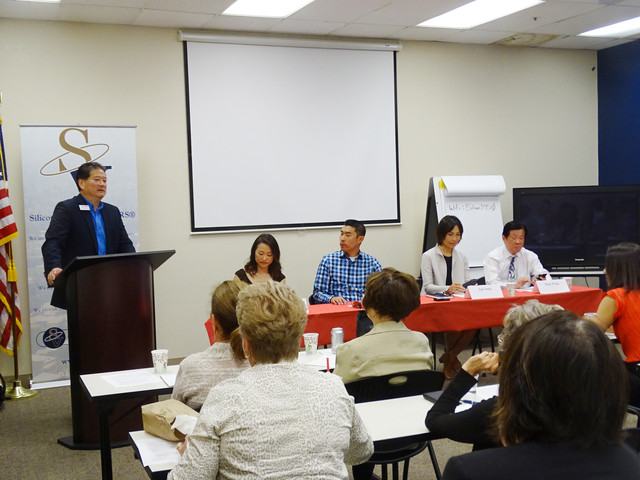
Not all Chinese are from mainland China. The Chinese client or agent you are dealing with may have been born here in the U.S., or Taiwan, Hong Kong and other parts of the world. Their world view, philosophy, and how they engage in real estate can differ, depending on where they were born and raised.
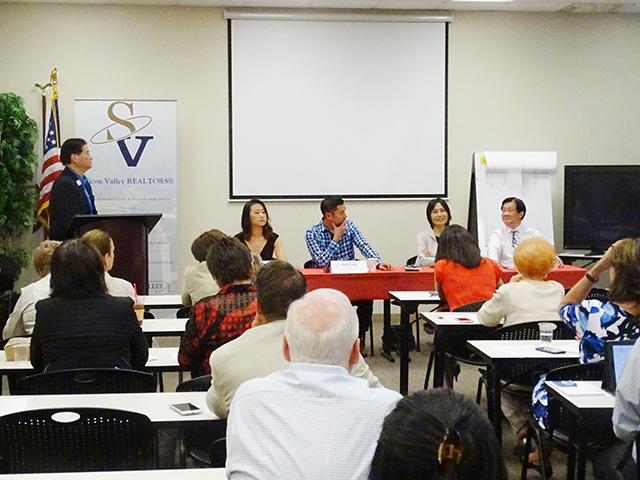
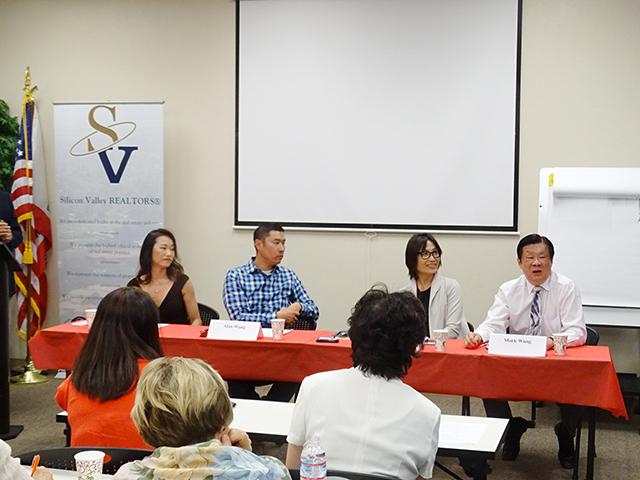
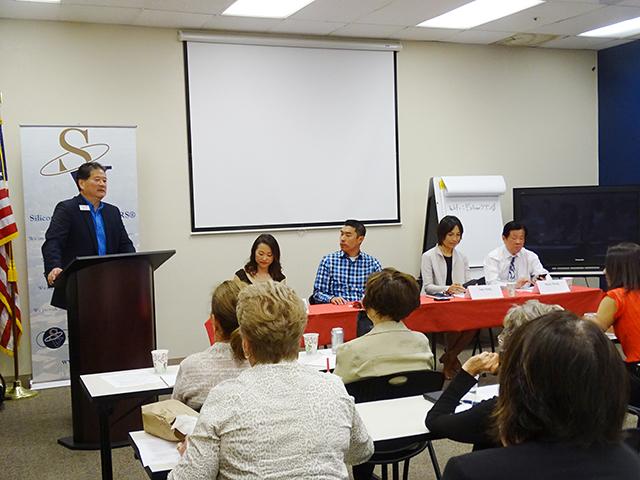
In "All Chinese Are Not the Same," SILVAR members learned about these differences from Mei Ling, a REALTOR® with Sereno Group, who is from mainland China; Amy Sung, a REALTOR® with Pacific Union International Realty, who is from Taiwan; and Alan Wang, a REALTOR® with Keller Williams Realty, who is an American born Chinese; and Mark Wong, a REALTOR® with Alain Pinel Realtors, who is from Hong Kong.
Also an American born Chinese, Jimmy Kang, who is a SILVAR REALTOR® and mortgage consultant with Prime Lending, served as moderator and posed questions to the panelists regarding their background, their world view, and how they do business.
Sung was born in Taiwan and came to the U.S. on a student visa. Ling also came to the U.S. as a graduate student from mainland China. Wong migrated from Hong Kong. Among the three OBCs (Overseas Born Chinese), adjusting to the America culture was easier for Wong, since Hong Kong was formerly a British colony. Chinese there speak English or a mixture of Cantonese and English. They are open, forward-thinking, embrace the western culture and way of doing business.
Because of its separation from mainland China, Taiwan is also western oriented, but very entrepreneurial since it is an island and dependent on imports from other countries to survive, "Everything in Taiwan is about doing business. You have to be in a trade. It is ingrained in our blood," said Sung.
Coming from a communist country, Ling said her generation grew up when Chinese culture and traditional elements of Chinese society were wiped out. She sees more generational differences. Her generation is more conservative, places value on education, is frugal and works hard for their money. She observes younger Chinese buyers from wealthy families in China don't appear to know how to manage money, spend freely, place more value in new and expensive homes. Then there are the super rich clients from the mainland who pay all cash and are very secretive about their finances. Ling added many Chinese buyers don't feel a loyalty to one agent and feel free to drop them for another.
Wang said the big difference between him, an ABC (American Born Chinese), and the OBCs is "knowing in America you have a voice. You are able to speak your mind and learn to speak up now before someone takes it from you." ABC clients and agents are more up front. Wang said many ABCs can't speak Chinese and most have assimilated into the American culture. They play football, basketball, eat hamburgers. He works well with the Taiwanese and Hongkongers because they adapt well to the American way of doing business. He struggles more with those from the mainland who are more conservative and demand greater effort to earn their trust.
The panelists have had encounters with other Chinese who seek favors because they too, are Chinese, but Wang noted, "It's all about fairness and ethics. It is a turn off if a Chinese client insists on a better deal just because they are Chinese. Ethically, it puts us in a bad spot."
The panelists agreed that asking for a commission rebate is part of the Chinese culture. "They have every right to ask, but we also have every right to say no," said Wong.
They also noted despite differences, the Chinese share basic traits, like:
- The Chinese don't like confrontation, so pay attention to non-verbal actions. Nodding means "I hear you," not yes; "Maybe" means no.
- Do not give a firm handshake. A lukewarm handshake will do.
- Hand your business card and receive their business card with both hands while facing them. Never place the card in your back pocket.
- Numbers and colors have meanings. i.e., 8 is wealth, 4 is death. Red and gold stand for joy and prosperity.
- Never embarrass them.
- Never ask where the money comes from.
- The Chinese like to socialize before talking business.
- The Chinese have a strong family support system.
- Respect is utmost. Respect hierarchy and seniors, pay attention to the parents and uncle.
- Speaking English is not be enough to gain trust. It is also not an upside to show off your knowledge.
- Though much of the world has recognized mainland China, it is still a sensitive topic to most Taiwanese and Honkongers, so stay away from the subject of politics!
In the end, Wong said, "Despite the differences, at the end of the day we are their agents and have to look after their best interest and treat them with respect and take care they don't lose face."
Photo Gallery
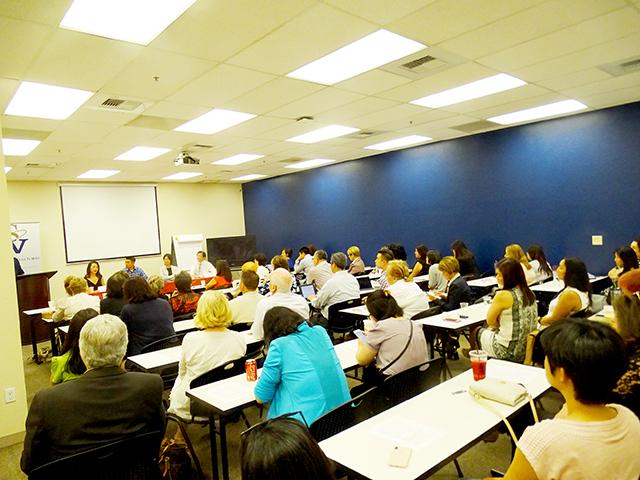
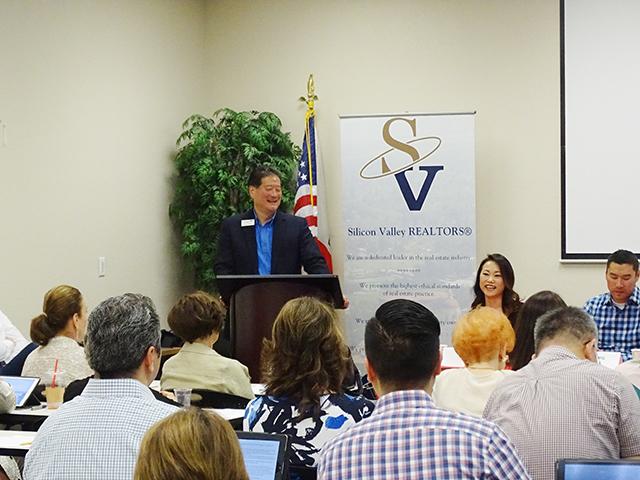
The Silicon Valley Association of REALTORS® (SILVAR) is a professional trade organization representing over 4,000 REALTORS® and Affiliate members engaged in the real estate business on the Peninsula and in the South Bay. SILVAR promotes the highest ethical standards of real estate practice, serves as an advocate for homeownership and homeowners, and represents the interests of property owners in Silicon Valley.
The term "REALTOR®" is a registered collective membership mark which identifies a real estate professional who is a member of the National Association of REALTORS® and who subscribes to its strict Code of Ethics.
For further information, please email or call the SILVAR office at (408) 200-0100.